





Compression Socks for Circulation: What To Look For

When it comes to choosing compression socks for circulation, most advice stops at “they help.” That tells you nothing when you’re researching compression socks online and trying to pick a pair. The useful question is narrower: what should you actually check before you buy?
This is an evaluation guide, not a benefits rehash or a treatment recommendation. Every criterion below is framed as a question you can ask while comparing options, because that’s the part the generic listicles skip.
How Compression Socks Support Circulation
Compression socks work through graduated compression. The pressure is tightest at the ankle and eases as it moves up the leg, which helps your veins push blood back toward the heart against gravity. If you’ve ever felt blood pooling in your lower limbs after a long shift, that upward assist is what you’re after.
The circulation in question here is venous return, not arterial flow. These socks support the blood working its way back up your legs, not the oxygen-rich blood heading down. Your calf muscle pump does most of this work normally, and graduated compression backs it up when that pump is fighting prolonged standing, long sitting, or the load of a twelve-hour day.
A few real triggers stack the deck against good lower-leg circulation: standing for hours, sitting through long-haul travel, pregnancy, age, and occupational load. If you want the deeper mechanics, how compression socks work covers them in full. Here, the mechanism just sets up what matters when you choose.

Who Benefits Most From Circulation Support
Generic “everyone needs them” claims aren’t useful. Specific scenarios are. The clearest case is being on your feet all day. If you’re a vet or vet nurse moving between consults, a nurse pulling a long shift, or working hospitality or retail, your legs are carrying occupational load that compression is built for. The professions compression socks range exists for exactly this reader.
The other side is staying static too long. Desk work, long flights, and recovery periods all let blood pool because the calf muscle pump isn’t firing. Compression keeps things moving when you can’t.
Then there are life-stage and condition-adjacent factors: pregnancy, mild swelling, tired and achy legs at the end of the day. Compression is a comfort and support tool here. If you’re managing an existing vascular condition, diabetes, or prescribed compression, that’s a conversation for your doctor or healthcare provider, not a self-selected purchase.
Understanding Compression Levels (mmHg)
Compression is measured in mmHg, or millimeters of mercury. It’s the single most important spec to evaluate, because it tells you how much pressure the sock actually applies. Here’s how the common ranges break down.
|
Range |
Label |
Realistically suited for |
|---|---|---|
|
8–15 mmHg |
Light |
Everyday wear, mild tiredness, prevention, first-time wearers |
|
15–20 mmHg |
Moderate |
Active circulation support, travel, long shifts (most common over-the-counter range) |
|
20–30 mmHg |
Firm / Medical |
Clinician-recommended for specific conditions |
|
30–40 mmHg |
Prescription |
Medical supervision, condition-specific |
The framework is simple: match the level to the intensity and duration of your use, not to “more is better.” Every pair Dr. Woof Apparel makes sits at 15–20 mmHg medium graduated compression, which lands in the moderate row as the standard over-the-counter choice for shifts and travel.
Higher compression is not automatically superior. A 20–30 mmHg sock you take off after an hour because it bites does less for your circulation than a 15–20 mmHg pair you wear comfortably all day. Self-selecting into firm or medical-grade compression without guidance can be a mistake. Consistent wear matters more than peak pressure.

What To Look For When Choosing
This is the part the title promises. Each criterion below is a question to ask while you compare options.
1) Graduated vs. Uniform Compression
Does the sock provide graduated compression, or uniform pressure all the way up? Graduated construction is what creates the upward flow toward the heart. Uniform compression squeezes evenly and does less for venous return. Check the product description for “graduated” specifically, and confirm the pressure is highest at the ankle.
2) Fit and Sizing
Will this actually fit your leg, or just your shoe? Sizing by shoe size alone is unreliable, because two people with the same foot can have very different calf and ankle measurements. Look for a brand that sizes on calf circumference, and check the chart against your own.
Watch for the signs of poor fit while wearing: rolling at the top, a band digging into your skin, pinching behind the knee, or the sock sliding down through the day. Any of those means the size or shape is wrong, and a wrong fit can restrict circulation rather than support it.
3) Material and Breathability
Will you want these on through a full shift? That comes down to fabric. Nylon and spandex blends stretch and hold shape; moisture-wicking and breathable construction keep your feet from overheating. Dr. Woof’s bamboo compression socks lean on bamboo rayon for a soft, sweat-wicking, antibacterial feel built for all-day wear, which is the kind of detail that decides whether you keep them on or peel them off at lunch.
4) Length and Style
Knee-high, crew, and ankle all cover different amounts of leg. Knee-high gives the most coverage along the calf where graduated compression does its work; crew and ankle suit lighter everyday wear. Pick the length you’ll wear consistently. It’s a preference call more than a circulation one.
5) Durability and Compression Retention
Will the compression last? It degrades with washing and wear, so check the care guidance before you buy. Cool washes and air drying preserve the graduated pressure far longer than hot washes and tumble drying. Our care guide for compression socks walks through the specifics. A sock that loses its squeeze in two months isn’t the value it looked like.
Comparing Compression Sock Types
Once you know the specs, it helps to locate the right category for your need. Three broad types cover most of the market.
|
Type |
Intent |
Typical mmHg |
Best-fit user |
|---|---|---|---|
|
Everyday / Lifestyle |
Comfort-first, fashion-forward |
Mild to moderate |
Daily wear, long shifts, travel |
|
Athletic / Recovery |
Performance and post-exercise recovery |
Moderate |
Exercise, DOMS, recovery periods |
|
Medical / Therapeutic |
Condition-specific, clinician-guided |
Firm to prescription |
Diagnosed vascular conditions |
Everyday and lifestyle compression is where comfort and pattern meet. Dr. Woof’s Sloth Compression Socks sit here as one example: a patterned bamboo pair that does the circulation work without looking like it came out of grandma’s drawer.
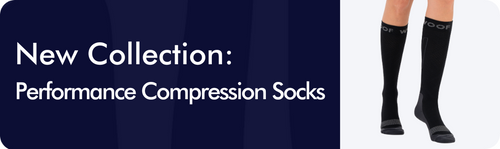
Athletic and recovery compression targets exercise and bounce-back, and the performance compression socks line covers that use case. Medical and therapeutic compression runs higher in mmHg and should be guided by a clinician. The key is matching the type to your intent rather than buying up the pressure scale.

Getting Fit and Sizing Right
Proper fit is what makes the circulation benefit real, so measure rather than guess. Wrap a tape around the widest part of your calf and the narrowest part of your ankle. Do it early, since legs swell through the day and an end-of-day measurement can read larger than your baseline.
Read the brand’s size chart against those two numbers, not your shoe size. When you fall between sizes, size up rather than down. A sock that’s slightly roomier still works; one that’s too tight can cut into circulation and undo the point.
The common fit mistakes are predictable: buying on shoe size, ignoring calf width, and choosing a higher compression than you’ll tolerate. Avoid those three and most of the fit problem solves itself.
Wearing and Caring for Compression Socks
Put them on first thing, before your legs have a chance to swell, and wear them through the active part of your day. How long you wear them each day depends on your routine, but the general rule is on for the standing or sitting stretch, off when you’re resting flat.
Care protects the graduated compression you paid for. Machine wash cool, under 30°C, with like colors. Skip bleach, skip the iron, skip the tumble dryer, and air dry instead. Replace them when the squeeze fades.
If you’re new to compression, expect a short adjustment period. The snug feeling is the socks working, not a sign of poor fit. As long as there’s no biting, pinching, or numbness, give it a few wears before you judge.
The Bottom Line
Choosing compression socks for circulation comes down to a handful of real checks: graduated construction, a sensible mmHg for how hard and long you’ll wear them, a fit measured on your calf rather than your shoe, breathable fabric you’ll keep on, and care that preserves the pressure over time.
For most people on their feet through a long day, moderate 15–20 mmHg graduated compression is the practical answer. The pair that helps your circulation most is the one you’ll wear consistently, which is a comfort and fit decision as much as a pressure one.