





Compression Socks for Shin Splints: Do They Help and How to Choose

That ache along your inner shin has a habit of showing up mid-run and lingering into the next day. If you're weighing up compression socks as part of the fix, the short answer is encouraging: they help manage shin splint pain and support recovery.
They earn that role as an adjunct. The underlying overuse injury still needs rest, better footwear, and smarter training loads to heal. This guide covers how compression works on shin pain, which compression level to choose, socks versus sleeves, and how to wear them correctly.

How Compression Socks Help Shin Splints
Shin splints, known clinically as medial tibial stress syndrome (MTSS), respond to compression through three mechanisms: improved circulation, reduced muscle oscillation, and controlled swelling. Each one targets a different part of what makes your shins hurt.
Compression socks won't repair the stressed bone and tissue causing the pain. What they do is make the recovery period more comfortable and support the lower leg while you address the actual cause. Axc
What Shin Splints Actually Are
Shin splints describe pain along the tibia, usually the inner edge of the shinbone. The pain comes from repetitive stress on the bone, the muscles attached to it, and the connective tissue between them. Your body can't keep up with the repair work, so the area becomes inflamed and tender.
Common triggers include:
-
Sudden increases in training volume or intensity
-
Running on hard surfaces like concrete
-
Worn-out or unsupportive footwear
-
Biomechanical factors such as flat feet or overpronation
-
Weak or tight calf muscles
Runners, dancers, military recruits, and anyone who has recently ramped up activity sit in the highest-risk group. Studies collated by Physiopedia put MTSS incidence at roughly 13.6 to 20% in runners and up to 35% in military recruits.
One warning before we get to the socks: MTSS sits on a continuum of stress-related bone injury. Left untreated, it can progress to a tibial stress fracture, which is a much longer road back. Persistent or worsening pain deserves a professional assessment.
The Science: How Compression Reduces Shin Pain
All three mechanisms below rely on one design principle: graduated compression. The sock is firmest at the ankle and eases as it moves up the calf, which keeps blood moving in the right direction rather than pooling in your lower leg.
Improved Circulation and Waste Removal
That graduated pressure supports venous return, the process of pushing blood back up toward the heart against gravity. Better blood flow delivers oxygen-rich blood to the strained tissue along your tibia and clears metabolic waste like lactic acid faster.
For you, that translates to less post-run soreness and quicker recovery between sessions. A 2025 meta-analysis of 27 studies found compression garments measurably aid recovery from exercise-induced muscle fatigue, including declines in strength and power.
Reduced Muscle Oscillation
Every footstrike sends vibration through your calf muscles. Over thousands of steps, that muscle oscillation contributes to micro-trauma in tissue already under repetitive stress. Compression acts like a second skin, holding the muscle steadier through impact.
A 2021 scoping review covering 183 studies found compression garments reduce muscle oscillation and offer positive sensorimotor effects. The same review found performance evidence overall is equivocal, which is a useful honesty check. Compression supports the leg; it doesn't make you faster.
Swelling and Inflammation Control
Injured tissue leaks fluid, and fluid buildup presses on nerve endings. Consistent pressure from a compression sock limits that buildup and supports lymphatic drainage. Less swelling around the shin means less of the throbbing tightness that makes stairs miserable the day after a hard run.
Socks vs. Sleeves for Shin Splints
Both deliver compression to the shin and calf. The structural difference is the foot. Compression socks cover it; compression sleeves are footless tubes covering the calf and shin only.
That difference matters more than it looks. Graduated compression is designed to start at the ankle. A sock delivers the full gradient from the ankle up, while a sleeve starts its pressure mid-lower-leg, which can allow fluid to pool around the ankle and foot during long wear.
|
What to compare |
Compression socks |
Calf compression sleeves |
|
Foot coverage |
Full foot included |
None; pair with your own socks |
|
Compression gradient |
Starts at the ankle, full gradient |
Starts above the ankle |
|
Best use case |
All-day wear, long shifts, full support |
Targeted calf support during runs |
|
Drawbacks |
One more layer to fit inside shoes |
Possible ankle swelling in long wear |
If you want blister protection, all-day wear, and the complete gradient, socks make the stronger case. If you have a favorite running sock you refuse to give up and only want targeted shin support during training, a sleeve layers over it. Match the format to how long you'll wear it.
Choosing the Right Pair
Once you've settled the sock question, three factors decide whether a pair helps or ends up in a drawer.
Compression Level (mmHg)
Compression strength is measured in millimeters of mercury, written as mmHg. Vague labels like “firm” or “supportive” don't tell you anything; the number does. The scale runs from mild everyday levels through 15 to 20 mmHg (moderate), 20 to 30 mmHg (firm), and 30 to 40 mmHg (extra-firm).
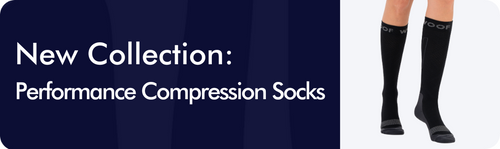
For daily wear and post-activity recovery, 15 to 20 mmHg moderate graduated compression is the common recommendation. Our socks, including the Performance Compression Socks in black, are built around that 15 to 20 mmHg graduated standard. Higher levels exist on the scale, and anything above moderate warrants a clinician's input first.
For a deeper breakdown of the scale, we've covered compression sock mmHg levels in full.

Material and Breathability
You'll be sweating in these. Moisture-wicking fabric matters because trapped sweat leads to chafing and irritation, and irritated skin over an already-sore shin compounds the problem.
Nylon and spandex blends dominate the performance end for durability and stretch. Merino wool handles temperature swings well. Bamboo blends bring softness with sweat-wicking and hypoallergenic properties; our Black Bamboo Compression Socks use a 40% rayon-from-bamboo blend with antibacterial fabric properties built in. Browse the full bamboo compression socks range if breathability tops your list.
Fit and Length
Compression only works at the right tightness. Too loose and the gradient does nothing; too tight and you restrict the circulation you're trying to improve. The correct feel is snug and supportive. Numbness or tingling means the sock is too tight.
Size by calf circumference, never by shoe size. Measure the widest point of your calf and check it against the size chart; our sizing runs XXS to 3XL. For shin splints specifically, knee-high socks are the standard pick because they cover the full shin and calf.
When and How to Wear Them
Wear compression socks during activity to reduce symptom onset, and afterward to support recovery. Many runners keep them on for two to four hours post-workout. They also help during long stretches of standing or walking.
That last one matters if you're reading this on a break between consults. A vet nurse covering a 12-hour shift or a nurse pacing hospital corridors puts the same repetitive load through the lower legs as a distance runner. The performance compression socks range covers both the training session and the shift after it, and a 4-pack lets you rotate pairs across training days without re-washing mid-week.
Application matters too. Pull the sock on smoothly with no bunching or rolling at the top, since rolled fabric creates a tourniquet band that concentrates pressure. We've written a full guide on how to put on compression socks if you're fighting with them.
Take them off for sleep unless a clinician has told you otherwise, and remove them any time you feel numbness or discomfort.
What Compression Socks Can't Do
Compression manages symptoms. It doesn't fix overtraining, worn shoes, or the biomechanics that caused the problem, and the trial evidence backs that caution. In the one randomized controlled trial on athletes with MTSS, adding compression stockings to a graded running program made no significant difference to how quickly athletes completed their return to running.
That trial measured time to finish a running program rather than comfort during wear, so it doesn't cancel out the circulation and recovery benefits above. It does confirm the honest framing: compression is one tool inside a full plan of rest, ice, stretching, calf and hip strengthening, footwear fixes, and gradual return to activity.
Two medical cautions. If you have a vascular condition such as peripheral artery disease or a history of DVT, talk to a clinician before wearing compression. And if shin pain is severe, persistent, or not improving with rest, see a sports medicine professional to rule out a stress fracture.
Compression Socks for Shin Splints: Common Questions
Do compression socks work for shin splints?
Yes, for symptom relief and recovery support. They improve circulation, reduce muscle vibration, and control swelling while the injury heals.
What compression level is best?
15 to 20 mmHg suits daily wear and recovery. Levels of 20 to 30 mmHg and above are best chosen with a clinician's guidance.
Should I wear them during or after running?
Both patterns work. During activity they reduce oscillation and symptom onset; afterward they support recovery.
Can compression socks prevent shin splints?
They can reduce the risk of flare-ups by limiting muscle vibration and supporting circulation, but prevention depends mainly on training load, footwear, and strength work.
Can you sleep in them?
Skip it unless a healthcare provider recommends overnight wear. Lying down removes the gravity problem the gradient is designed to solve.
Do they cure shin splints?
No. They relieve and support. Rest and fixing the root cause do the curing.
Treat the Symptom, Train Past the Cause
Compression socks give your shins measurable support: better blood flow to stressed tissue, less muscle vibration on impact, and controlled swelling afterward. Pick a graduated pair at 15 to 20 mmHg from the compression socks range, size it by calf circumference, and wear it through activity and recovery.
Then do the unglamorous part. Ease your training load, replace tired shoes, strengthen your calves, and give the bone time to catch up on repairs. The compression socks handle the daily discomfort while the rest of the plan handles the injury.