









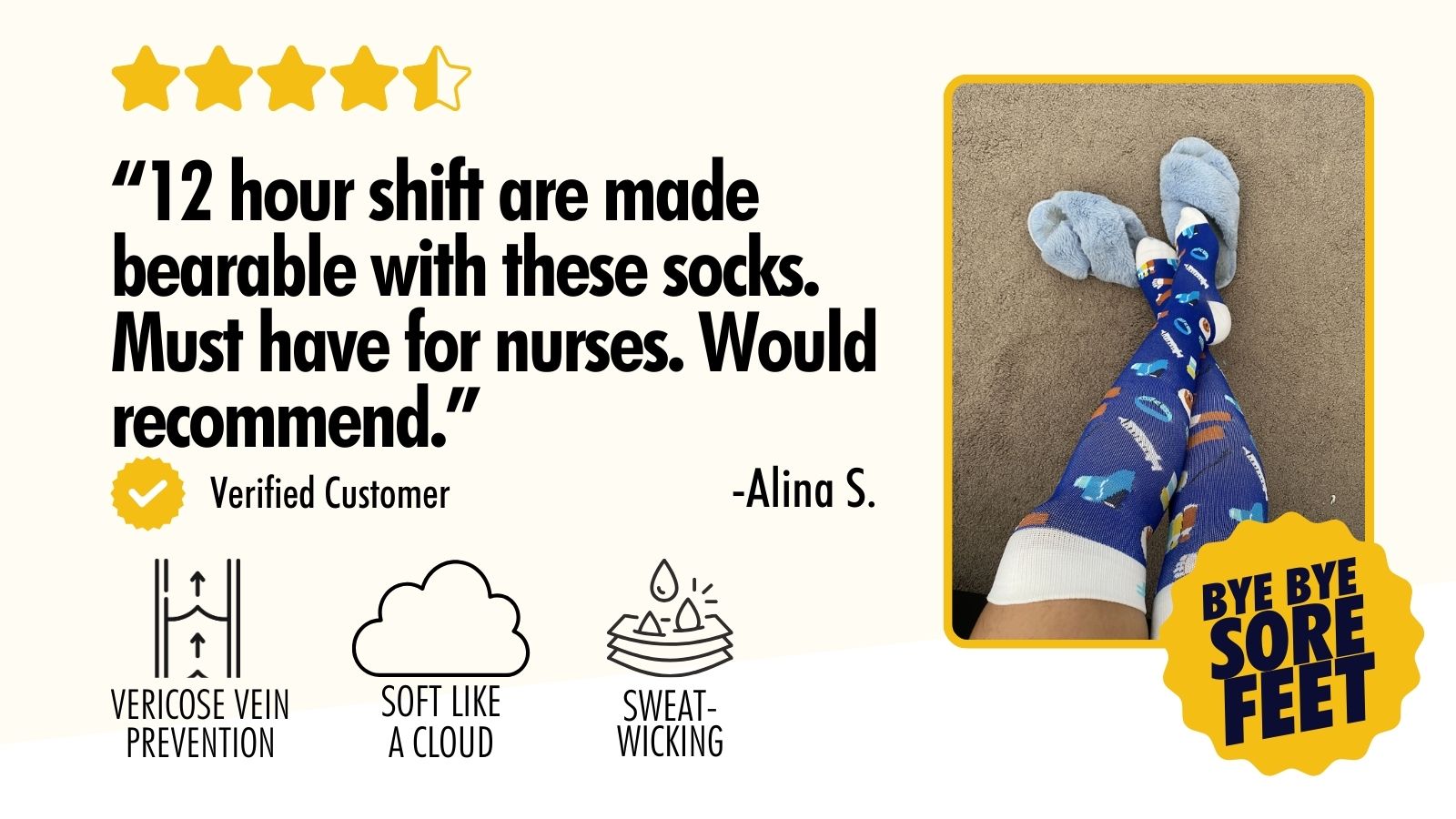


Oof, those 12-hour shifts are real kick-your-puppies kind of days, aren't they? We've all been there—legs barking, feet screaming, veins about to mutiny and go full-blown crabby cabbie on us. But don't hang those scrubs up just yet! We've got the perfect mega-comfy bamboo compression socks – like snuggling your tootsies in a cozy cloud.
Bamboo compression socks pair a plant-based fibre with 15-20 mmHg of graduated compression, so your legs get real support without the scratchy, sweaty feel of synthetic-only socks. We built them for vets, vet techs, nurses, and anyone whose shift doesn't include sitting down.
Soft enough for a twelve-hour day, firm enough to keep blood moving through it. Browse the full compression sock range or stay here for bamboo.
Why bamboo?
Every pair is 40% rayon from bamboo, 40% polyester, 12% polyamide, and 8% spandex. The bamboo-derived fibre is what makes the difference on a long shift.
It wicks sweat and dries fast, so damp fabric isn't sitting against your skin at hour ten. It's naturally antibacterial, which keeps odour down after back-to-back shifts. It's hypoallergenic for sensitive skin, and the fibre is biodegradable, a plant-based alternative to petroleum-sourced synthetics.
The hand-feel is the part people notice first: buttery-soft, closer to an everyday sock than a medical device.
Bamboo vs. nylon and cotton
Nylon socks are cheap and tough, but they trap heat and hold smell. Cotton breathes and then soaks up sweat and stays wet, which is the last thing you want mid-shift.
A bamboo blend sits between them: breathable like cotton, durable like nylon, with natural odour resistance neither one offers. The trade-off is care. Bamboo wants a cooler wash and air drying, and it won't survive a hot cycle or the tumble dryer. If you're weighing the two, our bamboo vs nylon breakdown goes deeper.
360° seamless construction
The compression wraps 360° around your leg with no vertical leg seams, which is where a lot of socks rub or dig in. The heel and toe are built up thicker for blister protection, and each sock runs 35cm (14 inches) from heel to cuff.
Seam-free matters most on the days you never take them off between clocking in and clocking out.
Regular, wide, and extra wide
Calf width is where most compression socks fail, so every design comes in Regular, Wide, and Extra Wide fittings, each in small, medium, and large.
To find yours, measure the widest part of your calf and your shoe size, ideally in the morning before any swelling sets in. If you're between sizes, size up. The compression sock size guide walks through it, and if you want them to go on easily, here's how to put compression socks on without a fight.
Built for people who don't sit down
You'll wear these on vet floors, hospital wards, and clinic rooms. If you're a vet tech restraining patients through back-to-back consults or a nurse working a double, graduated compression is what keeps your legs from aching by the time you clock out.
They help with swelling on long days, hold up well for standing shifts, and if you want a shortlist, see our picks for nurses. Many women wear compression socks to combat swelling, even if they aren't working long shifts.
15-20 mmHg, explained
All our compression socks use 15-20 mmHg medium graduated compression, firmest at the ankle and easing up the leg to move blood back toward the heart. No prescription needed for this range.
If you're not sure what the numbers mean, our guide to mmHg levels breaks it down, and when to wear compression socks covers the times to skip them. For how these compare to hospital-issue stockings, read TED stockings vs compression socks.
Prints, solids, and cause collections
The range runs well past plain black. Animal designs include Labradors, Border Collies, Cats Cats Cats, Capybara, and Drop Bear. There are medical prints like Just Med Things and Goofy Organs, florals like Daisy Delight and Red Flowering Gum, and quiet classics in White, Baby Pink, Caribbean Blue, and Midnight Argyle.
Cause designs like Breast Cancer Awareness and Everything Will Be Okay put a bit of meaning on your feet. Same 15-20 mmHg compression under every one.
Caring for your bamboo socks
Bamboo asks for a gentle routine. Machine wash under 30°C with like colours, then air dry. Skip the bleach, the iron, and the tumble dryer, and the compression holds its stretch far longer.
Our full washing and care guide has the details if you want them.
Matching the sock to your shift
Get your calf fitting right, Regular, Wide, or Extra Wide, and you're covered at a steady 15-20 mmHg across the range. What's left is the easy part: which design you pull on before your next shift.